
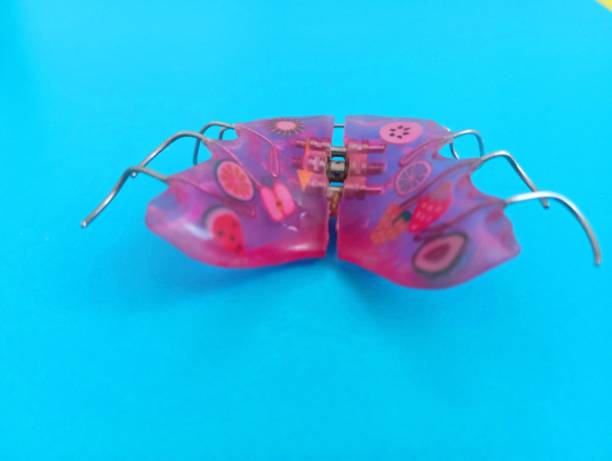
A palatal expander may be recommended when a child’s upper jaw or upper dental arch is too narrow compared with the lower arch. It is most often considered when that width difference causes a posterior crossbite or another bite problem that matters clinically, and while the child is still growing.
The upper jaw, called the maxilla, forms part of the hard palate (the roof of the mouth) and holds the upper teeth. When the upper and lower arches do not fit together the way they should, an orthodontic assessment can show whether widening the upper arch during growth makes sense.
The chain usually looks like this: a narrow upper jaw creates a mismatch between the upper and lower arches. That mismatch can lead to a crossbite or space problems. A careful evaluation then decides whether expansion, monitoring, or another approach fits best.
A few things are worth knowing from the start:
- Not every child with crowded teeth needs a palatal expander.
- Not every palate that looks narrow reflects a true skeletal problem.
- An expander is not simply a device for making room for teeth.
- Whether a child needs expansion, which type, and when all depend on the diagnosis and the child’s stage of growth.
At My Rivertown Dentist in Madison, IN, families can talk with Dr. Ashley Lee about developing teeth, jaw growth, and bite concerns as part of pediatric dentistry in Madison. This guide explains what expanders do, when they may help, and what they can and cannot change.
What Is a Palatal Expander, and How Does It Work in Children?
A palatal expander is an orthodontic appliance that increases the width of the upper dental arch. With certain appliances, and at the right stage of development, it can also widen the underlying skeletal structures of the upper jaw.
Different appliances produce different combinations of skeletal and dental change. That difference matters, because widening the upper jaw itself is not the same as tipping the upper teeth outward.
How the Upper Jaw and Hard Palate Develop During Childhood
The maxilla is made of two halves joined down the middle of the palate by a growth seam called the midpalatal suture. The upper teeth sit in the dental arch along the outer edge of the maxilla, so the width of the jaw and the width of the arch are closely linked.
During childhood, the upper jaw grows in width as well as length and height. In younger children, the midpalatal suture is generally more responsive to expansion forces. As skeletal maturity increases, the suture becomes more interlocked and harder to separate.
That change does not happen on a fixed birthday. Two children of the same age can be at very different stages of skeletal maturity, which is why orthodontists look at growth stage and the mixed dentition (the years when baby teeth and permanent teeth are both present) rather than age alone.
What Happens When an Expander Widens the Upper Arch?
An expander applies a gentle, controlled outward force to the upper arch. Depending on the appliance and the child, that force can open the midpalatal suture, move the teeth and their supporting bone outward, or do some of both.
Treatment generally moves through four stages:
- Activation: the appliance is adjusted according to the treating clinician’s instructions.
- Active expansion: the upper arch widens over a planned period.
- Stabilization: the expander usually stays in place after widening ends so new bone can form and the result can settle.
- Monitoring: the clinician checks the bite and decides on next steps.
Activation instructions are specific to each appliance and each child, and they’re covered in more detail in the treatment process below.
Skeletal Expansion vs. Dental Expansion: Why the Difference Matters
A wider upper arch can come from two different mechanisms. Skeletal expansion widens the maxilla itself. Dental expansion mainly tips or moves the teeth and the surrounding bone outward.
The two can look similar from the outside, but they solve different problems. A child with a genuine skeletal transverse deficiency, where the upper jaw is truly too narrow, may need an approach aimed at the bone. A child whose teeth are simply tipped inward may need a more tooth-focused approach.
This is why diagnosis, not appearance alone, determines the treatment strategy. Treating a skeletal problem with tooth movement alone can leave the underlying width difference in place.
When Might a Child Need a Palatal Expander?
A child may need a palatal expander when a narrow upper jaw creates a bite or space problem that is unlikely to correct itself with growth. The most common reasons are a posterior crossbite, a sideways jaw shift when the child bites down, and significant upper arch narrowness that limits room for permanent teeth. Each one still needs an individual evaluation.
Posterior Crossbite Caused by a Narrow Upper Arch
This is the most common reason an orthodontist considers expansion. Normally, the upper back teeth sit slightly outside the lower back teeth when a child bites down. When the upper arch is too narrow, some upper back teeth may bite inside the lower teeth instead.
The pattern runs from a narrow maxillary arch, to a width mismatch between the jaws, to a posterior crossbite. When that sequence is present, an expansion assessment often makes sense.
Not every crossbite has the same cause, though. A crossbite can be dental (a tooth tipped out of position), skeletal (a truly narrow upper jaw), functional (caused by a jaw shift), or a mix. Our guide to crossbite in children explains the types and how each is diagnosed.
A Functional Jaw Shift When a Child Closes Their Bite
Some children slide their lower jaw to one side as their teeth come together. This often happens because a narrow upper arch makes certain teeth meet too early, and the jaw shifts to find a more comfortable closing position.
This is called a functional mandibular shift. It is often linked with a unilateral posterior crossbite, where the crossbite appears on one side only.
A shift does not mean a child will develop permanent facial asymmetry. Still, because the jaw is closing in an off-center position during growth, a dentist may recommend an early orthodontic evaluation rather than waiting.
Significant Upper Arch Narrowness With Limited Room for Permanent Teeth
Expansion is sometimes considered when a narrow upper arch contributes to a space shortage for incoming permanent teeth. Widening the arch may create some of that room.
Crowding rarely has a single cause, however. It can come from tooth size, arch length, arch width, the position teeth erupt in, and how the jaws relate to each other. Learn more about crowded teeth in kids and how dentists tell a space issue from a growth issue.
Because of this, expansion does not automatically remove the need for braces or, in some cases, extractions later.
Developing Bite Problems That May Benefit From Interceptive Treatment
Palatal expansion is one tool within early, or interceptive, orthodontic treatment. Interceptive treatment aims to correct or reduce certain problems while a child is still growing.
An expander is often one part of a targeted plan rather than a complete orthodontic solution. It may be paired with monitoring, habit or muscle-function work, or later orthodontic treatment. Our guide to Phase 1 orthodontics for children explains how those broader decisions are made.
What Are the Signs That a Child May Need Upper Jaw Expansion?
Parents may notice upper back teeth biting inside the lower teeth, crowded or out-of-place permanent teeth, or a palate that looks narrow or high. These are reasons to schedule an evaluation, not a diagnosis. Only a clinical exam can show whether the upper jaw is truly narrow and whether expansion would help.
Upper Back Teeth Biting Inside the Lower Teeth
Ask your child to bite down on their back teeth and smile wide. In a typical bite, the outer edges of the upper back teeth sit just outside the lower ones, like a lid slightly overlapping a box.
If one or more upper back teeth disappear inside the lower teeth on one or both sides, a posterior crossbite may be present. You might also notice the lower jaw sliding to one side as your child closes.
These observations are worth mentioning at your child’s next visit. A dentist can confirm what is happening and whether the cause is dental, skeletal, or functional.
Crowded Upper Teeth or Permanent Teeth Erupting Out of Position
During the mixed-dentition years, space problems often become easier to see. Parents may notice crowded permanent front teeth, teeth coming in behind or in front of where they belong, rotated teeth, or new teeth that seem to have nowhere to go.
These findings can point to limited arch space. On their own, though, they do not show that the upper jaw is too narrow or that expansion is needed. Tooth size and eruption patterns can produce the same appearance.
A Narrow-Looking Upper Dental Arch or High Palate
A high-arched palate and a narrow palate are not the same thing. Palatal height describes how deep the roof of the mouth is. Arch width describes how far apart the upper teeth sit. Skeletal width describes the size of the upper jaw bone itself.
These measurements are related, but one does not guarantee the others. There is also no single “ideal” palate width, because normal ranges change with age and individual anatomy. Our article on narrow palate in children covers how palate width is evaluated in more detail.
Mouth Breathing, Tongue Posture, and Other Oral Function Concerns
Some children with a narrow upper jaw also breathe through their mouth, rest their tongue low in the mouth, or snore. These observations can appear alongside a narrow palate, but they are not automatic reasons for an expander.
Persistent mouth breathing or snoring may reflect nasal obstruction, enlarged tonsils or adenoids, allergies, or sleep-disordered breathing. Those possibilities may need evaluation by a physician or other specialist. The Sleep Foundation notes that jaw and facial structure are among several recognized contributors to sleep apnea in children, alongside other factors.
Expansion is not a proven stand-alone treatment for sleep apnea. For more on how breathing patterns and growth interact, see our guide to mouth breathing and orthodontic development.
At What Age Is Palatal Expansion Usually Considered?
There is no single right age for a palatal expander. Expansion is usually considered while a child is still growing, and the timing depends on skeletal development and the type of bite problem rather than a birthday.
Growth stage shapes how the upper jaw is likely to respond. That expected response guides which appliance is chosen, and the appliance choice in turn shapes when treatment makes sense.
Why the Mixed-Dentition Years Are Important
The mixed-dentition years, when baby teeth and permanent teeth share the mouth, are often a useful window for evaluating width problems. The permanent first molars and front teeth are in place, so the relationship between the upper and lower arches is easier to judge.
Orthodontic screening is commonly recommended by about age 7. Concerns that are already visible, such as a crossbite or jaw shift, can be checked earlier. Learn more about what an early orthodontic evaluation involves for Madison kids.
A screening is not the same as starting treatment. Many 7-year-olds who are evaluated do not need an expander, and many simply need periodic monitoring.
Can a Palatal Expander Be Used Before All Permanent Teeth Erupt?
Yes, when it is clinically indicated. Some expansion approaches are designed specifically for the mixed-dentition period.
Planning at this stage takes extra care. The clinician considers which teeth can anchor the appliance, which teeth are about to come in, and how the child’s remaining growth may affect the result.
Is Expansion Different for Teenagers and Adults?
Yes. As skeletal maturity increases, the midpalatal suture becomes harder to separate, so conventional tooth-borne expansion becomes less predictable at widening the jaw itself.
For more mature patients, clinicians may consider other approaches. One of these is MARPE, or miniscrew-assisted rapid palatal expansion, which anchors the expander to the bone. MARPE is a different approach from conventional pediatric expansion, not a substitute for it, and it is covered briefly below.
What Types of Palatal Expanders Are Used for Children?
The main types are rapid palatal expanders, slower or removable expansion appliances, and, for more skeletally mature patients, bone-anchored designs such as MARPE. The right choice depends on the diagnosis and the child’s growth stage, not on one appliance being best for everyone.
Rapid Palatal Expanders (RPE)
A rapid palatal expander, also called a rapid maxillary expander, is usually fixed to the upper back teeth and has a small adjustable screw in the middle of the palate. Small, controlled activations widen the appliance over a planned period.
In growing children, this force can open the midpalatal suture and widen the upper jaw, along with some movement of the teeth. Appliance designs and activation protocols vary from case to case.
Because the forces are meaningful and the timing matters, an RPE should only be activated exactly as the treating clinician directs, with regular check-ins along the way.
Slow Expansion and Removable Expansion Appliances
Some appliances widen the arch more gradually. Some are fixed, and others are removable plates with an adjustable screw.
Slower appliances tend to produce mostly dental and arch changes. A removable expansion plate does not necessarily create the same skeletal effect as a rapid expander, and removable designs also depend on how consistently the child wears them.
MARPE and Skeletal Expansion: Are They Necessary for Children?
MARPE, or miniscrew-assisted rapid palatal expansion, anchors the expander to the palatal bone with small temporary screws, sometimes in combination with the teeth. The maxillary skeletal expander (MSE) is one well-known design.
Because MARPE is anchored to bone, it relies less on the teeth to deliver force. It is most often discussed when conventional skeletal expansion is less predictable. That usually means teens and adults whose midpalatal suture has matured. My Rivertown Dentist offers MARPE for teens and adults for those situations.
For younger children who are still growing, MARPE is generally not the default. A conventional expander, chosen and timed well, is often appropriate when expansion is needed at all.
What Is the Palatal Expander Treatment Process Like?
Palatal expansion typically follows four steps: an evaluation, choosing the right approach, placing and activating the appliance under supervision, and a monitoring and stabilization period. The details of each step depend on the child and the appliance.
Step 1 — Examining Jaw Width, Bite, and Tooth Development
The process starts with a clinical exam. The dentist looks at how the upper and lower arches meet, checks for crossbite or a jaw shift, and reviews which teeth have erupted and which are still on the way.
Dental records such as photos, impressions or digital scans, and X-rays help document the starting point. 3D imaging may be used when it is clinically helpful for assessing the jaws in more than one dimension.
Step 2 — Selecting the Appropriate Expansion Approach
If expansion looks appropriate, the clinician weighs several factors: the diagnosis, the child’s skeletal maturity, which teeth can anchor an appliance, the appliance design, and the overall treatment goals.
Not every child receives the same expander. Some need a rapid expander, some a slower appliance, and some no expansion at all.
Step 3 — Appliance Placement and Supervised Activation
A fixed expander is fitted to the upper teeth during an office visit. Families then receive appliance-specific instructions, including how and when any activation should happen.
Those instructions are individual. Activation schedules vary from child to child, so families should follow only the plan their own clinician provides.
Step 4 — Monitoring Expansion and Stabilizing the Result
During and after active widening, progress visits let the clinician check bite changes, appliance fit, and oral hygiene around the appliance.
Once the target width is reached, active expansion stops, but the appliance usually stays in place to stabilize the result while new bone fills in. Active expansion and total appliance wear are very different timeframes. With a rapid expander, widening may take only a few weeks, while stabilization often takes considerably longer.
After that, the clinician reassesses the bite and plans any retention or next phase. Our article on keeping early orthodontic results stable explains why this stage matters.
Does a Palatal Expander Hurt? What Children May Experience
Most children feel pressure or tenderness rather than sharp pain, especially in the first days and after activations. Every child is different, though, so it helps to know what is common and what is worth a call.
Pressure, Tenderness, and Speech Changes
Temporary pressure across the upper teeth, the roof of the mouth, or even the bridge of the nose is common during adjustment. Children may also notice extra saliva, a slight lisp, or a different feel when swallowing.
These changes usually ease as the tongue and mouth adapt. Persistent or severe pain, swelling, or an appliance that feels loose should be reported to the treating clinician promptly.
Why a Gap May Appear Between the Front Teeth
During some forms of maxillary expansion, a temporary gap can appear between the upper front teeth. This is called a midline diastema, and it can happen as the two halves of the upper jaw move apart.
Not every child develops a visible gap. A gap on its own also does not prove that skeletal expansion succeeded, so the clinician relies on the full clinical picture rather than this sign alone.
Eating, Brushing, and Keeping the Expander Clean
Food can collect around and above an expander, so daily cleaning matters. A few habits help:
- Brush carefully around the bands and the parts of the appliance that touch the teeth.
- Rinse with water after meals to flush trapped food.
- Follow the clinician’s advice about sticky, hard, or chewy foods.
- Keep every follow-up visit so the appliance and the gums can be checked.
What Can a Palatal Expander Correct — and What Can’t It Fix?
A palatal expander addresses width problems in the upper jaw and arch. It can be very effective for the right problem, but it is not a fix for every orthodontic concern, and it cannot guarantee changes to breathing, appearance, or future treatment needs.
Problems Expansion May Help Address
When clinically indicated, expansion may help with:
- Transverse maxillary deficiency, where the upper jaw is too narrow.
- Certain posterior crossbites caused by that narrowness.
- Width mismatches between the upper and lower arches.
- Selected space problems where arch width is part of the cause.
Problems Expansion Does Not Automatically Correct
Expansion on its own does not resolve every case of:
- Severe crowding
- Overbite or underbite
- Rotated teeth
- Impacted teeth
- Front-to-back skeletal differences between the jaws
It also should not be expected to improve breathing, change facial appearance, or eliminate future orthodontic care on its own. Some children do see benefits in more than one area, but those outcomes vary and are not promised.
Will My Child Still Need Braces After Expansion?
It depends on the child. Some children need a later phase of orthodontic treatment, such as braces or clear aligners, to align the teeth once growth and eruption progress. Others may need only monitoring or limited treatment.
The expander’s role is to correct the width problem at the right time. Whether more treatment follows is decided by reassessing the bite as permanent teeth come in, as part of a broader early-treatment plan such as Phase 1 orthodontics for children.
How Madison Dentists Determine Whether Early Expansion Is Appropriate
At My Rivertown Dentist in Madison, IN, the decision about expansion starts with a full look at how a child’s jaws, bite, and teeth are developing. Dr. Ashley Lee’s approach to early intervention orthodontics in Madison evaluates jaw structure, jaw joints, facial balance, and airway alongside the teeth, and palate expanders are one of the options available in our office when they are the right fit.
Evaluating Palate Width, Crossbite, and Permanent Tooth Space
The factors that matter most include:
- The width of the upper arch compared with the lower arch
- Whether a crossbite is present, on one or both sides
- Whether the lower jaw shifts when the child bites down
- How much room there is for incoming permanent teeth
- The child’s stage of tooth development and growth
3D imaging can help show whether a narrow arch reflects the jaw itself or mainly the position of the teeth, which guides whether expansion would address the real problem.
When Monitoring or an Orthodontic Referral May Be Recommended
An evaluation does not automatically lead to an expander. Depending on what the exam shows, the recommendation may be:
- Monitoring, with growth and the bite checked at future visits
- Interceptive treatment, which may include expansion when a width problem is confirmed
- Referral or collaboration with another specialist when a concern falls outside the scope of early treatment, such as an airway issue that needs medical evaluation
The goal is to match the plan to the child, so treatment happens only when it is likely to help.
Frequently Asked Questions About Palatal Expanders for Kids
Does every child with a narrow palate need an expander?
No. A narrow-looking upper arch does not automatically mean there is a skeletal problem or a need for expansion. The decision depends on how the upper and lower jaws relate, whether there is a crossbite, how much space is available, the child’s growth stage, and the overall orthodontic diagnosis.
What is the best age for a palatal expander?
There is no single best age for every child. Expansion is often considered during growth, but the right timing depends on skeletal development, the type of bite problem, and how the child is expected to respond to treatment.
Can a palatal expander fix crowded teeth?
Expansion may help with certain space limitations when a narrow upper arch is part of the problem. Crowding can also come from tooth size, eruption patterns, and other factors, so expansion does not guarantee that braces or other treatment will be unnecessary.
How long does a child wear a palatal expander?
Treatment length varies by appliance, diagnosis, and how the child responds. The active widening phase and the later stabilization phase are different, and the treating clinician decides how long the appliance should stay in place.
Does a palatal expander change a child’s face?
Expansion can change how the dental arches relate and may produce some skeletal change, depending on the treatment. Parents should not expect predictable cosmetic changes to the cheeks, nose, or facial appearance without an individualized orthodontic assessment.
Is MARPE better than a regular palatal expander for children?
Not necessarily. MARPE and conventional expanders are anchored differently and suit different patients. Appliance choice depends on skeletal maturity, anatomy, diagnosis, and treatment goals rather than one device being better for everyone.
Can a palatal expander help with mouth breathing or sleep apnea?
Expansion may affect the upper jaw and nasal anatomy in some patients, but it should not be presented as a stand-alone cure for mouth breathing or obstructive sleep apnea. Children with persistent snoring, breathing concerns, or suspected sleep-disordered breathing need appropriate medical assessment.
Schedule a Pediatric Jaw and Palate Evaluation in Madison, IN
If you have noticed a crossbite, a narrow upper arch, teeth coming in out of place, or crowding, a calm, thorough evaluation is a good next step. Noticing a sign does not mean your child needs treatment, but it is worth having it checked while there is still growth to work with.
At My Rivertown Dentist in Madison, IN, Dr. Ashley Lee will look at your child’s jaw growth, arch width, bite development, and space for permanent teeth. From there, we will explain whether monitoring, early treatment, or a referral makes the most sense, and answer your questions along the way.
Ready to get clear answers? Schedule a pediatric jaw and palate evaluation with our Madison team today.


